
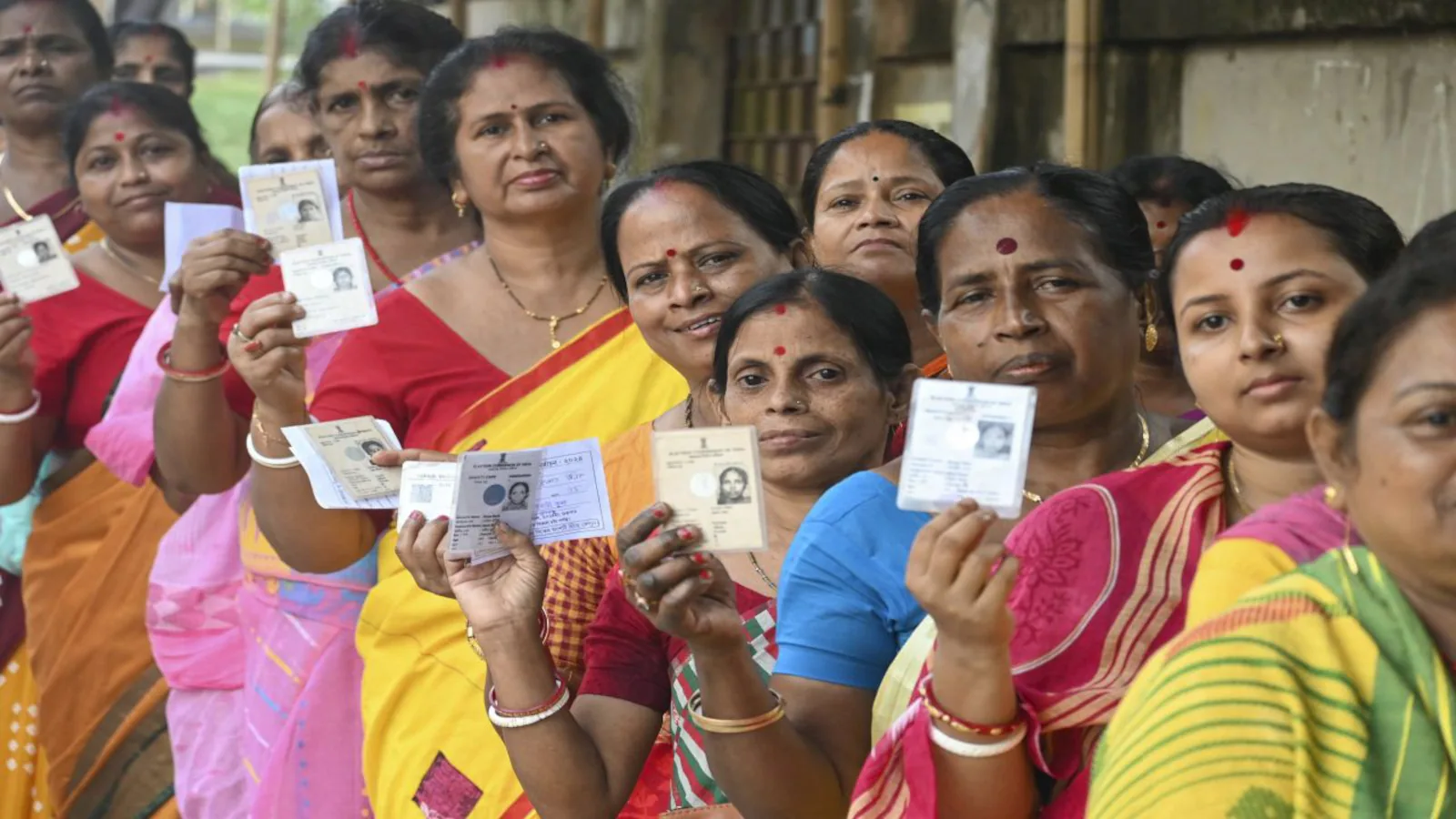

The Election Commission of India (ECI) has announced the schedule for the West Bengal Assembly Elections 2026, with voting set to take place in two phases on April 23 and April 29. The results for all 294 assembly constituencies will be declared on May 4, while the entire election process will conclude by May 6.
With the announcement of the poll schedule, the Model Code of Conduct has come into immediate effect across the state to ensure free and fair elections.
Two-Phase Polling Across 294 Constituencies
According to the ECI, the elections will be conducted in two phases covering all constituencies of the state assembly.
Phase 1 will cover 152 assembly seats, with polling scheduled for April 23.
Phase 2 will include the remaining 142 seats, where voting will take place on April 29.
Detailed Election Schedule
Phase 1 – 152 Constituencies
- Notification: March 30, 2026
- Last Date for Nominations: April 6, 2026
- Scrutiny of Nominations: April 7, 2026
- Last Date for Withdrawal: April 9, 2026
- Polling Day: April 23, 2026
- Counting of Votes: May 4, 2026
- Completion of Election Process: May 6, 2026
Phase 2 – 142 Constituencies
- Notification: April 2, 2026
- Last Date for Nominations: April 9, 2026
- Scrutiny: April 10, 2026
- Withdrawal of Nominations: April 13, 2026
- Polling Day: April 29, 2026
- Counting of Votes: May 4, 2026
- Completion of Election Process: May 6, 2026
Background: Polling Phases and Security
West Bengal has historically seen elections conducted in multiple phases due to security concerns. In 2021, the state voted in eight phases, while elections in 2016 and 2011 were held in six phases, and 2006 saw five phases of polling. Central paramilitary forces were deployed during these elections to maintain law and order. The state has not completed voting in a single day since 2001.
Political Tensions Ahead of Polls
The announcement of the election schedule comes amid rising political tensions between the Bharatiya Janata Party (BJP) and the ruling Trinamool Congress (TMC).
Prime Minister Narendra Modi recently accused the TMC government of turning Bengali Hindus into a minority and alleged that the party opposed the Special Intensive Revision (SIR) of the electoral roll to benefit illegal infiltrators.
Shortly before Modi’s rally, clashes reportedly broke out between TMC and BJP supporters near the venue, with groups throwing stones and shouting slogans.
The TMC strongly rejected the allegations and accused the BJP of trying to create religious polarization ahead of the elections, setting the stage for a heated campaign.
Electoral Roll Dispute and Mamata Banerjee’s Protest
West Bengal Chief Minister Mamata Banerjee has also been in disagreement with the Election Commission over the revision of electoral rolls.
The TMC has alleged that nearly 6.3 million names were removed from voter lists and another six million voters were placed under the “under adjudication” category.
In protest, Banerjee staged a sit-in demonstration on March 6 at Esplanade in Kolkata, the same place where she held a 26-day hunger strike in 2006 against land acquisition for the Tata Motors project in Singur. That movement helped build public support that eventually led to the TMC’s victory over the Left Front in 2011.
Changing Political Landscape in West Bengal
The TMC has ruled West Bengal since 2011, ending the 34-year Left Front government. Over the years, the BJP has emerged as the main opposition party in the state.
- 2011 Election: TMC won 184 seats, Congress 42, and the Left 40.
- 2016 Election: BJP secured 3 seats.
- 2021 Election: BJP significantly increased its presence, winning 77 seats, while the TMC secured 213 seats, later rising to 215 after by-poll victories.
In the 2019 Lok Sabha elections, the BJP won 18 of West Bengal’s 42 parliamentary seats, but its tally dropped to 12 seats in the 2024 general elections.
Supreme Court’s Intervention on Voter Lists
The Supreme Court of India recently stepped in regarding voter list revisions. Invoking its powers under Article 142 of the Constitution, the court directed the Election Commission to continue publishing supplementary voter lists even after the final electoral roll deadline to ensure that no eligible voter is excluded.
To speed up the verification process, the Chief Justice of the Calcutta High Court was authorized to bring in additional judicial officers from neighbouring states such as Jharkhand and Odisha. More than 250 serving and retired district judges have been assigned to resolve nearly five million claims and objections related to voter registration.
As campaigning intensifies, the upcoming elections are expected to witness a high-stakes political contest between the TMC and BJP, with the results on May 4 set to determine the next government in West Bengal.