

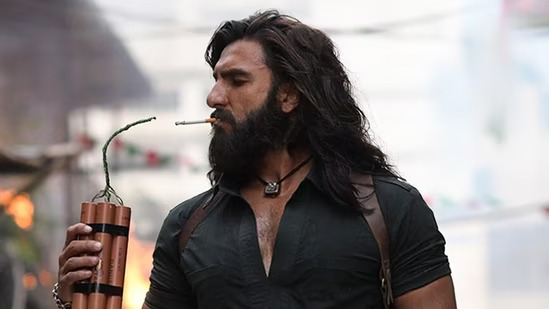

The upcoming sequel Dhurandhar 2 is already creating massive buzz ahead of its release. With the tagline “Honsla, Eendhan, Badla” (Courage, Fuel, Vengeance) and an expected runtime of nearly four hours, director Aditya Dhar and actor Ranveer Singh appear ready to recreate the impact of the first film, Dhurandhar, which became a major pop-culture phenomenon.
However, even before hitting theatres, the sequel has been labelled “propaganda” by some critics and commentators. Supporters of the film argue that dismissing it so quickly ignores both the audience’s expectations and the evolving scale of Indian cinema.
A Story Rooted in Crime and Revenge
For viewers unfamiliar with the original film, Dhurandhar draws loose inspiration from gang wars in Lyari, Karachi, and unfolds largely as an underworld drama. Actor Akshaye Khanna plays the feared gangster Rehman Dakait, who controls the area’s criminal network.
The trailer of Dhurandhar 2 has sparked debate because of its provocative dialogues. It opens with a controversial line about Hindus and ends with Ranveer Singh’s character declaring that India will decide Pakistan’s future. While some see these lines as politically charged, others argue that dramatic nationalism has long been a staple of mainstream Bollywood.
Bollywood’s History of Loud Patriotism
Hindi cinema has a long tradition of high-voltage patriotic storytelling. In the 1980s and 1990s, films such as Hukumat and Tahalka delivered similar aggressive action and patriotic themes.
In Krantiveer, actor Nana Patekar delivered fiery speeches that audiences cheered for, earning him a National Award. Likewise, films like Gadar: Ek Prem Katha and Maa Tujhe Salaam featured dramatic dialogues about nationalism that became hugely popular with audiences.
Back then, these films were largely seen as classic “masala” entertainers, not political propaganda.
Changing Times, Changing Scrutiny
What has changed today is the level of scrutiny. Modern films are often dissected line by line on social media, and a single dialogue can trigger heated political debates online. While discussions and differing opinions are natural, they sometimes turn cinema into a battleground for ideological arguments.
At its core, Dhurandhar is a gritty spy thriller featuring a revenge-driven Indian agent operating in a realistic yet mainstream action setting. Unlike glamorous spy franchises inspired by James Bond, the film avoids romanticised spy clichés and focuses on intense conflict and suspense.
Cinema Reflects Its Era
Popular films often mirror the concerns and conversations of their time. Themes such as nationalism, security, and cross-border tensions are part of India’s contemporary public discourse, making it unsurprising that they appear in mainstream action films.
Earlier decades also reflected their own social climate through cinema. From Raj Kapoor’s socially conscious films to patriotic classics like Upkar and Purab Aur Paschim, Bollywood has always captured the spirit of its times.
Similarly, when Amitabh Bachchan portrayed the iconic “Angry Young Man” fighting corruption in the 1970s, he reflected the frustrations of the era. Today, Ranveer Singh’s spy character confronting cross-border terrorism reflects modern geopolitical anxieties.
Audience Trends Shape the Industry
Recent blockbusters such as Animal and Gadar 2 have shown that audiences are currently drawn to high-energy action, intense violence and strong nationalist themes.
Meanwhile, thoughtful films like Ikkis, directed by Sriram Raghavan, struggled at the box office despite positive reviews. This suggests that the current audience preference leans more toward adrenaline-filled spectacle rather than quiet reflection.
The Double Standard in Spy Films
Critics also point out that spy movies around the world typically present stories from their own national perspective. In Pakistan, for example, the blockbuster Waar portrays India as the antagonist.
Similarly, Hollywood spy thrillers such as Top Gun: Maverick or the Mission: Impossible series frequently highlight American military or intelligence agencies as global heroes. These films are usually praised for their action and cinematography rather than criticised as propaganda.
The Controversial Dialogues
Much of the criticism surrounding Dhurandhar focuses on two particular lines—one about a future government that “truly cares about the nation,” spoken by a character resembling India’s National Security Adviser Ajit Doval, and Ranveer Singh’s declaration about a “New India.”
Even filmmaker Anurag Kashyap, who praised the film’s craft, admitted that these dialogues felt politically motivated but still appreciated its filmmaking and Ranveer Singh’s performance.
A Masala Entertainer at Heart
Ultimately, the film’s success appears to lie in its ability to deliver what many audiences currently enjoy—spectacle, intense action and unapologetic heroism.
In the story, Ranveer Singh plays Hamza Ali Mazari, an Indian spy who infiltrates Dakait’s criminal empire, rises within the organisation, and ultimately eliminates him. The sequel continues his mission as he seeks revenge for events such as the Indian Airlines Flight 814 hijacking and the 2008 Mumbai attacks.
As anticipation builds for Dhurandhar 2, the film may be better understood as part of Bollywood’s long tradition of loud, high-energy masala entertainment, rather than purely as a political statement.