

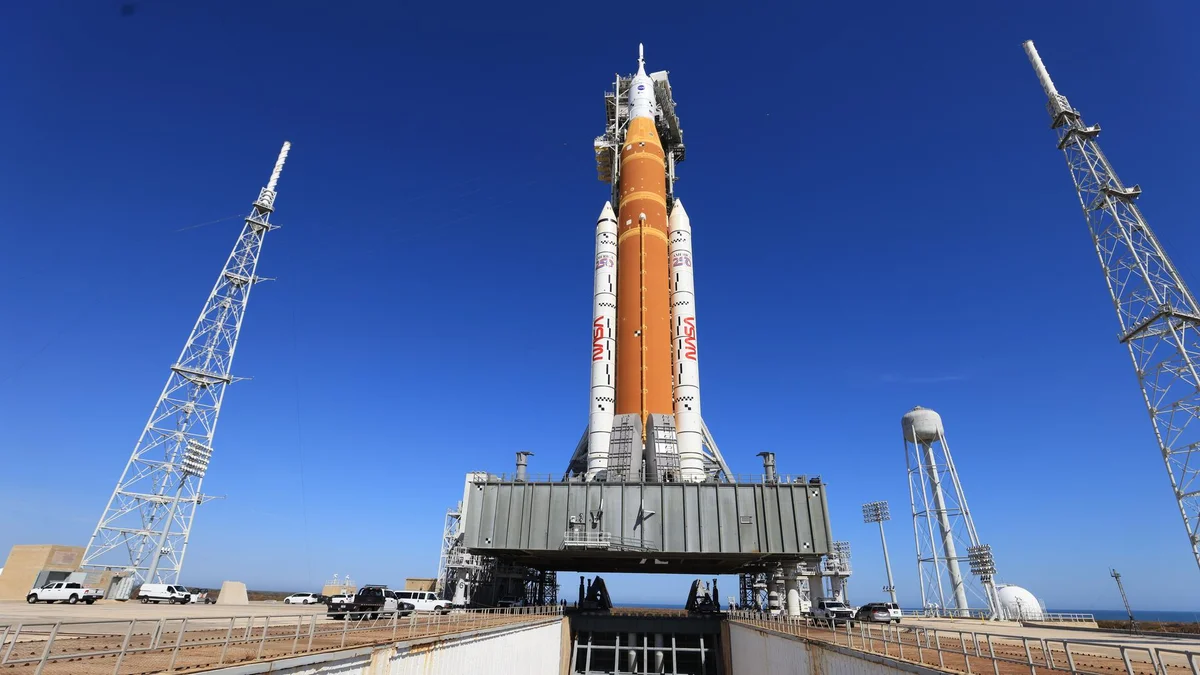

NASA is aiming to launch its Artemis II mission in early April, marking the first time astronauts will travel around the Moon in more than five decades.
The mission was initially scheduled for March, but engineers detected a helium leak in the rocket system, prompting the agency to move the rocket back to the Vehicle Assembly Building at Cape Canaveral, Florida for repairs. NASA officials say the issue has now been resolved and the rocket is expected to be rolled back to the launchpad on March 19, with April 1 targeted as the earliest possible launch date.
First Crew to Fly on NASA’s Mega Moon Rocket
The mission will carry four astronauts: Reid Wiseman, Victor Glover, and Christina Koch from the United States, along with Canadian astronaut Jeremy Hansen. They will become the first humans to travel aboard NASA’s powerful Space Launch System rocket and the Orion spacecraft.
During the 10-day mission, the crew will fly around the far side of the Moon—the region not visible from Earth—before returning home.
NASA Emphasises Mission Risks
Speaking at a briefing, John Honeycutt, chair of the Artemis II Mission Management Team, said NASA has been carefully evaluating every possible risk before launch.
He noted that historically, new rocket systems have about a 50% success rate in their early missions, but expressed confidence that NASA’s extensive testing and safety protocols have significantly reduced the risks.
No Additional “Wet Dress Rehearsal” Planned
NASA confirmed that it will not conduct another “wet dress rehearsal”, a pre-launch test where the rocket is fuelled and taken through the full countdown procedure.
According to Lori Glaze, acting associate administrator for NASA’s Exploration Systems Development Mission Directorate, the agency believes another test would not provide significant additional benefits.
Instead, the next time the rocket is fully fuelled will be during the actual launch attempt.
Pressure to Meet the Launch Deadline
NASA is under increasing pressure to proceed with the mission, which has already been delayed by nearly two years due to issues with the heat shield discovered during the earlier Artemis I mission, an uncrewed test flight around the Moon.
In December 2024, the agency set a target to launch Artemis II before the end of April 2026.
Despite remaining technical checks and preparations, officials say the agency is focused on making the April launch window possible.
“We’re comfortable targeting April 1 as our first opportunity,” Glaze said, while stressing that the final launch decision will depend on system readiness and safety assessments.