
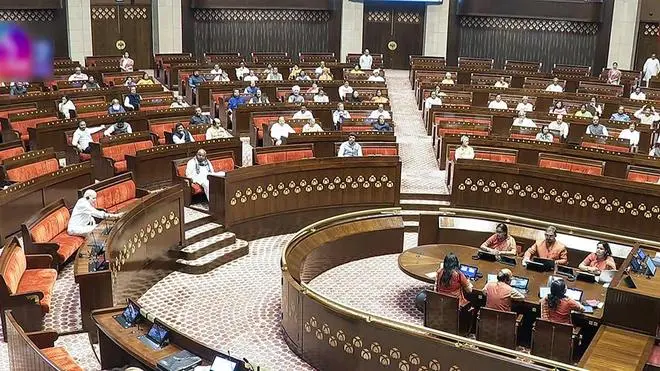

India’s political arena saw significant movement on Monday as voting commenced for the biennial Rajya Sabha elections covering 37 seats across 10 states. These elections are being held to fill vacancies in the Upper House of Parliament as the terms of several sitting members are set to end in April 2026. The counting of votes is scheduled to begin at 5 PM.
The elections are taking place in Assam, Bihar, Chhattisgarh, Haryana, Himachal Pradesh, Maharashtra, Odisha, Tamil Nadu, Telangana and West Bengal. However, most of the seats have already been decided without a contest, leaving only a few states where voting is necessary.
26 Candidates Elected Unopposed
Out of the 37 seats, 26 candidates have already secured their positions unopposed because the number of nominees matched the available seats. The BJP emerged with seven uncontested seats, while the Congress secured five. The Trinamool Congress won four seats and the DMK three. Several regional parties—including Shiv Sena, NCP, NCP (SP), AIADMK, PMK, RPI(A) and UPPL—each secured one seat.
Some prominent political figures elected or re-elected to the Rajya Sabha include Sharad Pawar, Abhishek Manu Singhvi, Tiruchi Siva and Vinod Tawade. With these results already settled, attention has shifted to the remaining competitive seats.
Voting Taking Place for 11 Seats
Voting is currently underway for the remaining 11 seats, including five in Bihar, four in Odisha and two in Haryana. Initially, 40 candidates filed nominations for the elections. After withdrawals and uncontested victories, 14 candidates remain in the race for these seats.
The outcome of these contests will finalize the representation of the respective states in the Rajya Sabha.
Bihar Emerges as the Key Battleground
Bihar has become the most closely watched state in this round of elections. The National Democratic Alliance (NDA) is hopeful of winning all five seats from the state.
Among the candidates is Bihar’s long-serving Chief Minister Nitish Kumar, who has decided to move to the Rajya Sabha. He filed his nomination earlier in the presence of senior leaders, including Union Home Minister Amit Shah. In a message shared on X, Kumar stated that he intends to continue working for the development of Bihar and maintain his close relationship with the people of the state.
Other NDA candidates from Bihar include BJP leader Nitin Nabin, Rashtriya Lok Morcha leader Upendra Kushwaha, JD(U) leader and Union minister Ram Nath Thakur, and BJP state general secretary Shivesh Kumar.
Resort Politics Raises Concerns in Odisha and Haryana
The elections have also sparked political tension in Odisha and Haryana amid fears of cross-voting by legislators. In Odisha, both the Congress and the BJP reportedly shifted their MLAs to resorts to prevent possible defections. The Congress also alleged that attempts were made to bribe its legislators in Bengaluru, adding to the controversy.
In Haryana, Congress leaders initially moved their MLAs to resorts in Himachal Pradesh before relocating them again due to security concerns and alleged attempts by rival parties to influence voting.
Results Could Impact Rajya Sabha Dynamics
The results of the remaining contests could have an impact on the political balance in the Rajya Sabha. With several senior leaders retiring and new faces entering the Upper House, the elections are expected to shape parliamentary dynamics in the coming months.
Political parties across the country are now closely watching the results as counting begins later today.